Kansa metal is an ancient Indian bronze – an alloy of roughly 78% copper and 22% tin, also called bell metal. For over 3,000 years, Ayurveda has prized Kansa for drinking water and eating food, believing it helps balance the body and aid digestion. This guide explains what Kansa is, the traditional benefits of drinking water and eating from Kansa, how it compares to copper, whether it is safe, and how to care for it.
Key Takeaways
- What is Kansa metal? A bronze alloy of ~78% copper and ~22% tin (bell metal), used in India for millennia.
- Drinking water from Kansa – traditionally "Kansa jal," water rested overnight in a Kansa cup – is believed in Ayurveda to balance the three doshas and support digestion.
- Eating from Kansa is thought to aid metabolism and add a mindful, heritage touch to daily meals.
- Kansa vs copper: copper is a pure metal; Kansa is a copper-tin alloy that is harder and suited to both eating and drinking.
- Safety & care: Kansa is safe for daily use; avoid storing acidic liquids, hand wash, and let its natural patina develop.
What is Kansa metal?
Kansa (pronounced kaan-sa) is a traditional Indian bronze made by combining about 78% copper and 22% tin. Because of the ringing tone it produces, it is also known as "bell metal." It is one of the oldest alloys used in the Indian subcontinent, valued for tableware, ritual objects and instruments for thousands of years.
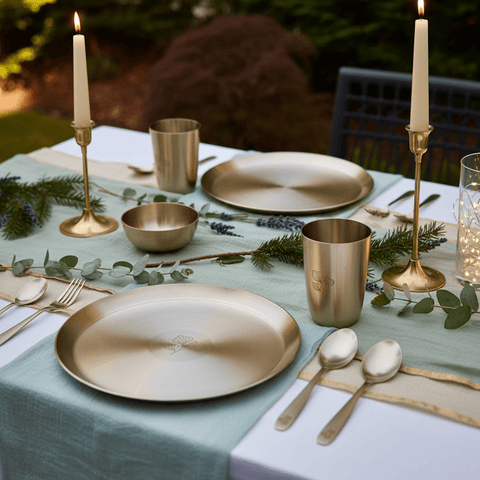
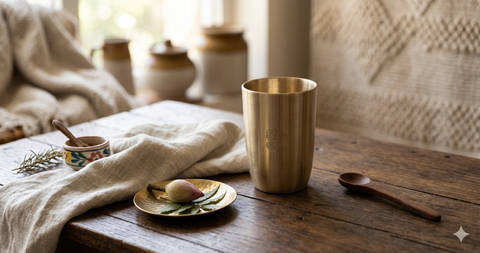
Unlike decorative metals, Kansa is a food-grade heritage material. The tin content gives the surface a smooth, golden finish that is harder and more food-friendly than pure copper, which is why Kansa is used for cups, bowls, plates and thalis you actually eat and drink from. Aurevaa's Kansa pieces are crafted from pure, unlacquered bell metal so they develop a natural patina with age.
Is Kansa the same as bronze, brass or copper?
Short answer: Kansa is a type of bronze, but it is not the same as brass or pure copper. The difference comes down to what each metal is made of.
| Metal | What it is | Best used for |
|---|---|---|
| Kansa (bell metal) | Bronze alloy: ~78% copper + ~22% tin | Eating & drinking – cups, bowls, plates, thalis |
| Copper (Tamba) | Single pure metal | Storing & drinking water |
| Brass (Pital) | Alloy of copper + zinc | Cooking, serving, decor |
| Bronze (general) | Copper + tin (Kansa is a specific bronze) | Varies by alloy |
So when people compare Kansa vs copper, the key point is that copper is a pure metal best known for storing water, while Kansa's copper-tin blend makes it the traditional choice for both drinking and eating.
What are the benefits of drinking water from Kansa?
According to Ayurveda, drinking water from a Kansa cup is a daily wellness ritual. Traditional texts and practitioners associate Kansa water benefits with the following:
- Balancing the doshas: Kansa is believed to help harmonise Vata, Pitta and Kapha – the three energies Ayurveda uses to describe the body.
- Supporting digestion: sipping water stored in Kansa is traditionally thought to aid digestion and metabolism.
- Alkalising stored water: practitioners hold that water resting in bell metal becomes gentler on the stomach.
- A mindful pause: reaching for a handcrafted Kansa cup turns an ordinary glass of water into an intentional, grounding moment.
These are traditional wellness beliefs, not clinically proven medical outcomes – see the note at the end of this article.
Should you drink overnight water stored in Kansa?
Yes – this is the classic ritual known as "Kansa jal." The idea is simple and easy to adopt:
- Fill a clean Kansa cup or tumbler with filtered drinking water before bed.
- Cover it and let the water rest overnight (around 8 hours).
- Drink it first thing in the morning on an empty stomach.
Ayurveda suggests this overnight contact is what allows the water to take on Kansa's believed balancing qualities. Use plain water for storage – keep lemon water, citrus juice and other acidic drinks out of Kansa for long periods.
What are the benefits of eating food from Kansa?
Eating from a Kansa bowl, plate or thali is as much a part of the tradition as drinking from it. The believed benefits of eating in Kansa include supporting healthy digestion and metabolism, encouraging slower and more mindful meals, and bringing a sense of heritage and ceremony to everyday dining. A Kansa bowl set for dessert or a Kansa snack plate for fruit and mithai is an easy way to begin.
Is it safe to eat and drink from Kansa (bronze)?
Kansa has been used safely for food and water across India for centuries, and authentic bell metal is considered safe for daily eating and drinking. To keep it that way, follow a few simple guidelines:
- Avoid acidic foods and liquids for long storage: tin reacts with acidity, so don't leave lemon water, citrus, tamarind or pickles sitting in Kansa.
- Choose pure, unlacquered Kansa: a natural, uncoated surface is part of what makes it food-safe and lets a healthy patina form.
- Hand wash only: skip the dishwasher and harsh abrasives.
If you've searched whether bronze utensils are good for health or safe to eat with, the answer is that genuine, well-maintained Kansa is a trusted, time-honoured choice.
How to use and care for your Kansa
Caring for Kansa is quick and keeps it beautiful for generations:
- Hand wash with mild soap and a soft cloth, then dry immediately.
- To revive the golden shine, rub gently with a paste of tamarind or lemon and a pinch of salt, then rinse and dry thoroughly.
- Let the natural patina develop, or polish occasionally – both are normal for unlacquered bell metal.
- Because each piece is handcrafted, slight variations in tone and finish are a mark of authenticity, not a defect.
Shop Aurevaa's handcrafted Kansa collection
Every piece below is made from pure Kansa bell metal (78% copper, 22% tin), handcrafted and engraved, with free US shipping. Start your Kansa ritual with a cup for daily water, or bring the tradition to the table with a bowl set or plate from our Kansa kitchenware collection.
 Kansa Cup $45.00 View product →
  Kansa Bowl Set $55.00 View product →
  Kansa fluted Dessert Bowl Set $70.00 View product →
  Kansa Snack Plate Set $100.00 View product →
  Kansa Fluted Bowl Set $60.00 View product →
  Kansa Dessert Bowl Set $65.00 View product →
  Kansa Fluted Cup $55.00 View product →
Explore the full Kansa Collection →
Frequently asked questions about Kansa
Is Kansa good for health?
In Ayurveda, Kansa (bronze) is traditionally regarded as a beneficial metal for daily use. Eating and drinking from Kansa is believed to help balance the three doshas – Vata, Pitta and Kapha – and to support digestion. These are traditional wellness beliefs rather than proven medical claims, so treat Kansa as a mindful lifestyle choice, not a treatment.
Can we drink water in Kansa daily?
Yes. Many households store and sip water from a Kansa cup or tumbler every day, often water that has rested overnight (known as ‘Kansa jal’). Use it for plain water, herbal tea or buttermilk. Avoid storing highly acidic liquids like lemon water or citrus juice for long periods, as acidity reacts with bronze.
What is the difference between Kansa and copper?
Copper is a single pure metal, while Kansa is an alloy of roughly 78% copper and 22% tin (also called bell metal or bronze). Copper vessels are used for storing water, whereas Kansa is prized for both drinking and eating because the tin content gives it a harder, food-friendly surface and its signature golden tone.
Does Kansa need special care?
Kansa is unlacquered, so it naturally develops a warm patina over time. Hand wash it with mild soap and dry immediately. To restore shine, gently rub the surface with a paste of tamarind or lemon and a pinch of salt, then rinse and dry. Avoid the dishwasher, harsh abrasives and prolonged soaking.
Is Kansa safe for hot drinks?
Kansa has been used for hot foods and warm drinks for centuries and is considered safe for warm tea, milk or water. Because metal conducts heat, the vessel can feel warm to hold. The main caution is acidity, not temperature – keep sour or citrus-based liquids out of Kansa for extended storage.
Where can I buy authentic handcrafted Kansa tableware?
Aurevaa offers a handcrafted Kansa collection made from pure bell metal (78% copper, 22% tin), including Kansa cups, bowl sets, dessert bowls and snack plates, with free US shipping. Each piece is handmade, so subtle variations are part of its character.
A note on wellness claims: The Ayurvedic benefits described in this article are based on traditional practices and cultural beliefs. They are not intended as medical advice or a substitute for professional healthcare guidance. Individual results and experiences may vary.